RoguelikeDev
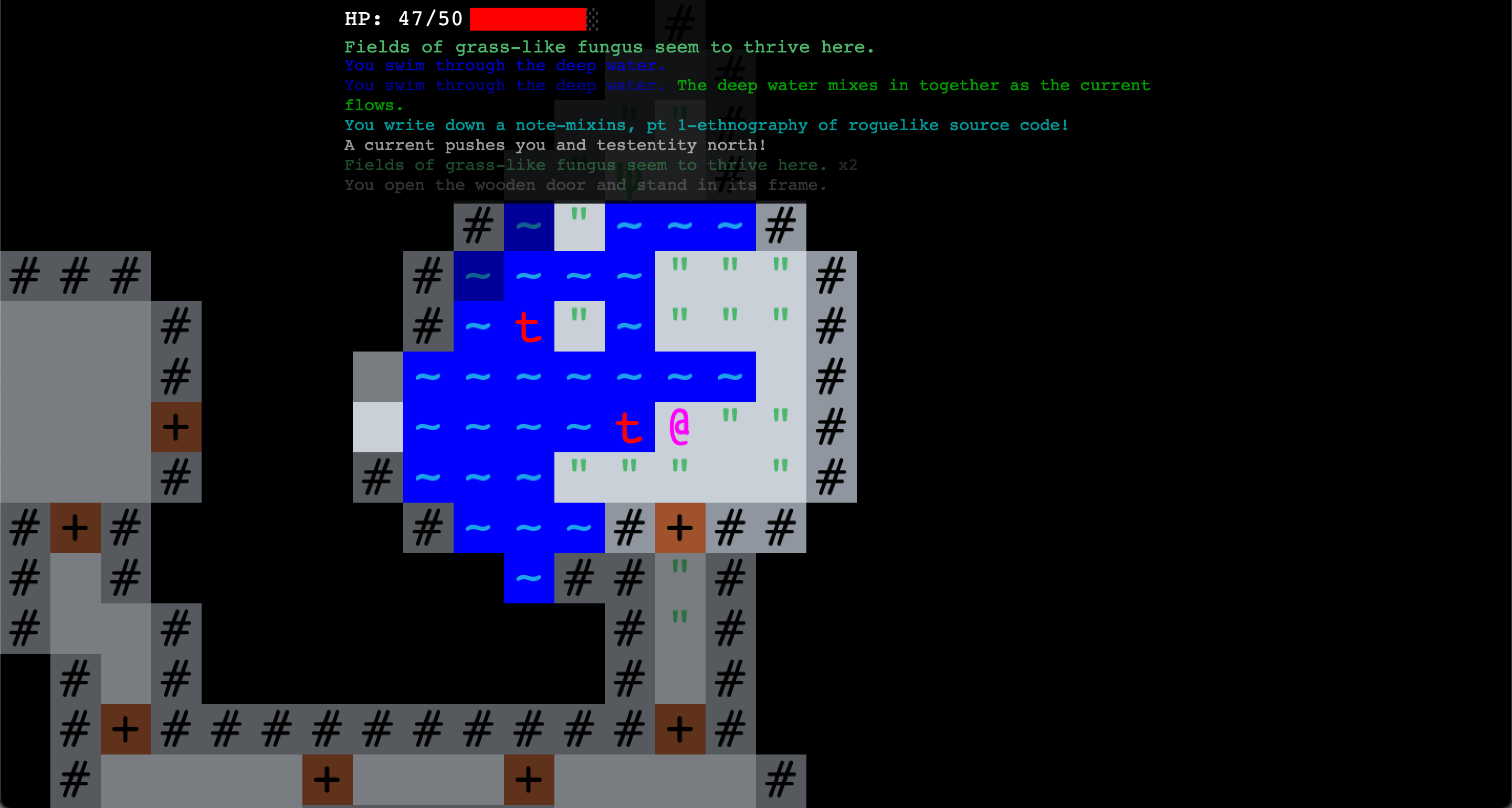
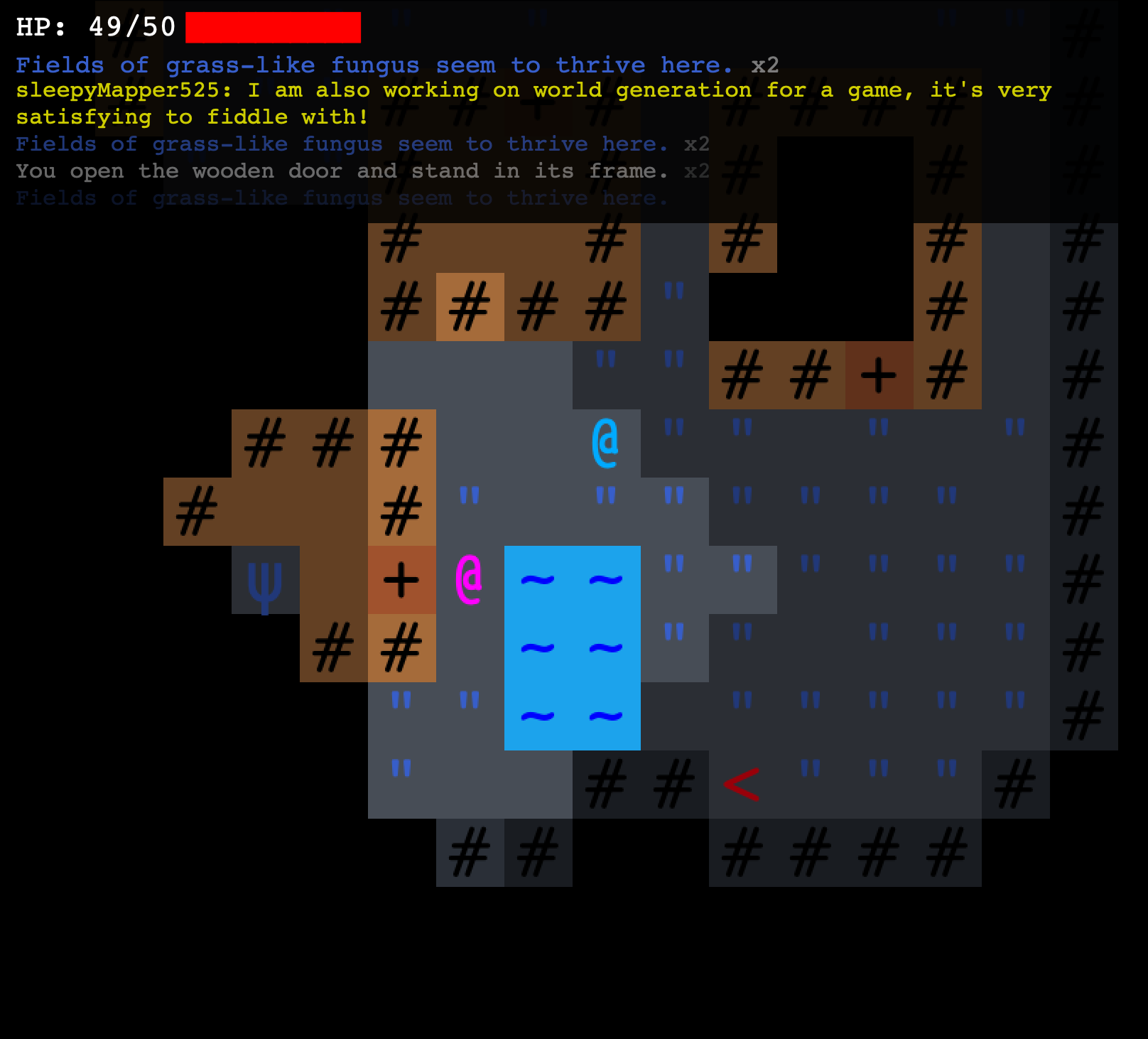
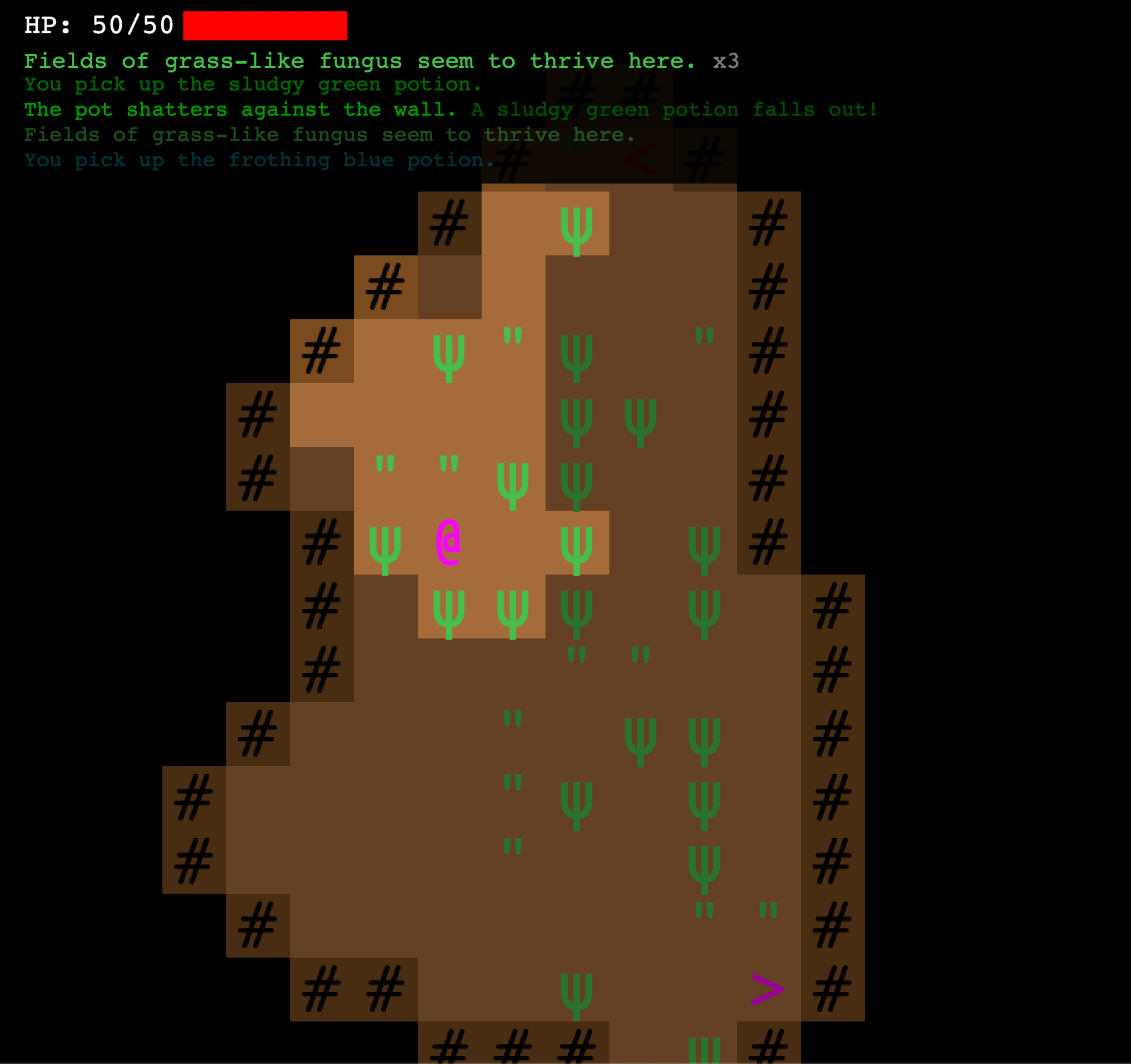
Descending the stairs, you are now 50ft underground. The air here feels thick from the spores of dense fields of grass-like fungus...
Controls:
Press WASD or the arrow keys to move around the game world.
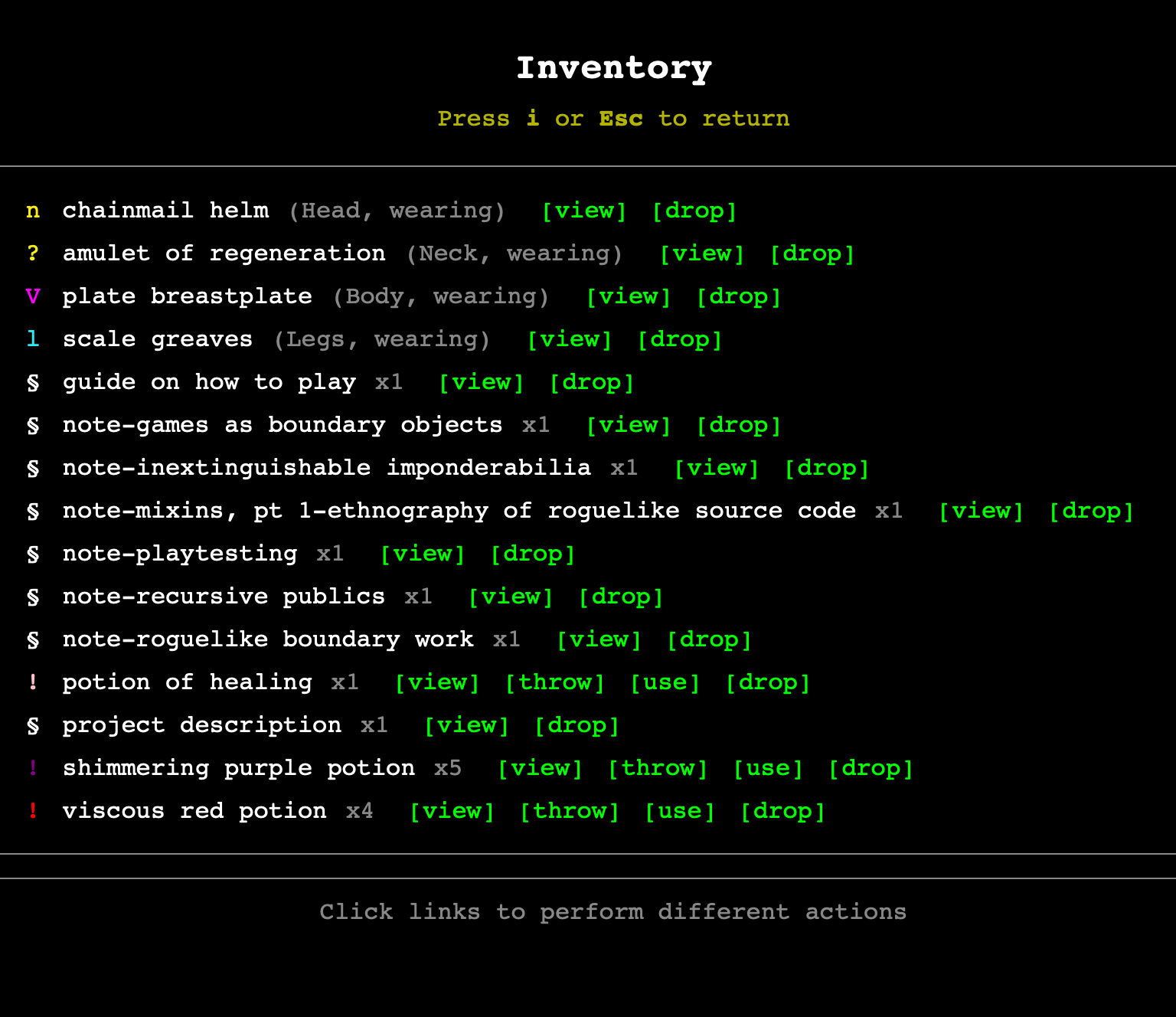
Press i to open the inventory.
The Story So Far:
"Subterranean Homesick Blues"! What madness has possessed you to come down here? You had heard rumours of vast subterranean spaces: caves, ancient dungeons, twisting passageways, underground people, mazes etcetera, that lie between you and the inner sanctum of the Temple of the Ekilehgor, where the Amulet of Yendor resides 450ft beneath the earth...
You descended into the depths of the underground, wishing to obtain the amulet, to bring it into the outside world, while writing your ethnographic essay that is due pretty soon.
Project Description:
This is my ethnography of traditional roguelike development communities (TRDCs) that is also itself a roguelike.
It invites you to enter a game world, where you will play and work as a playtester.
It is presented in the non-linear multimodal format of a roguelike game, as my capstone project final submission for the NUS Anthropology course SC4101 Practising Sociology and Anthropology.
The main in-game ethnographic text is approximately 3000 words. The initial deliverable of the 1000 word "companion essay" has now also been incorporated into the game.
It is a complete roguelike game (it has a "win" condition).
Inventory:
Inside the inventory screen, some actions can be taken by clicking on links:
View: read a detailed description of the item.
Throw: takes a turn. You will be prompted to input WASD or arrow keys to hurl the item in those directions. It flies until it hits/affects the nearest entity or wall.
Use: takes a turn. Uses the item on yourself.
Drop: takes a turn. Remove the item from your bag or your body, placing it on the tile you are currently standing on.
Game Features:
Permanent death of the player.
8 procedurally generated, persistent levels with differentiated feels.
Turn-based, grid-based movement.
Text-based graphics.
Field of vision and noise.
7 types of potions which are initially unidentified.
Combat with 6+ distinct enemies.
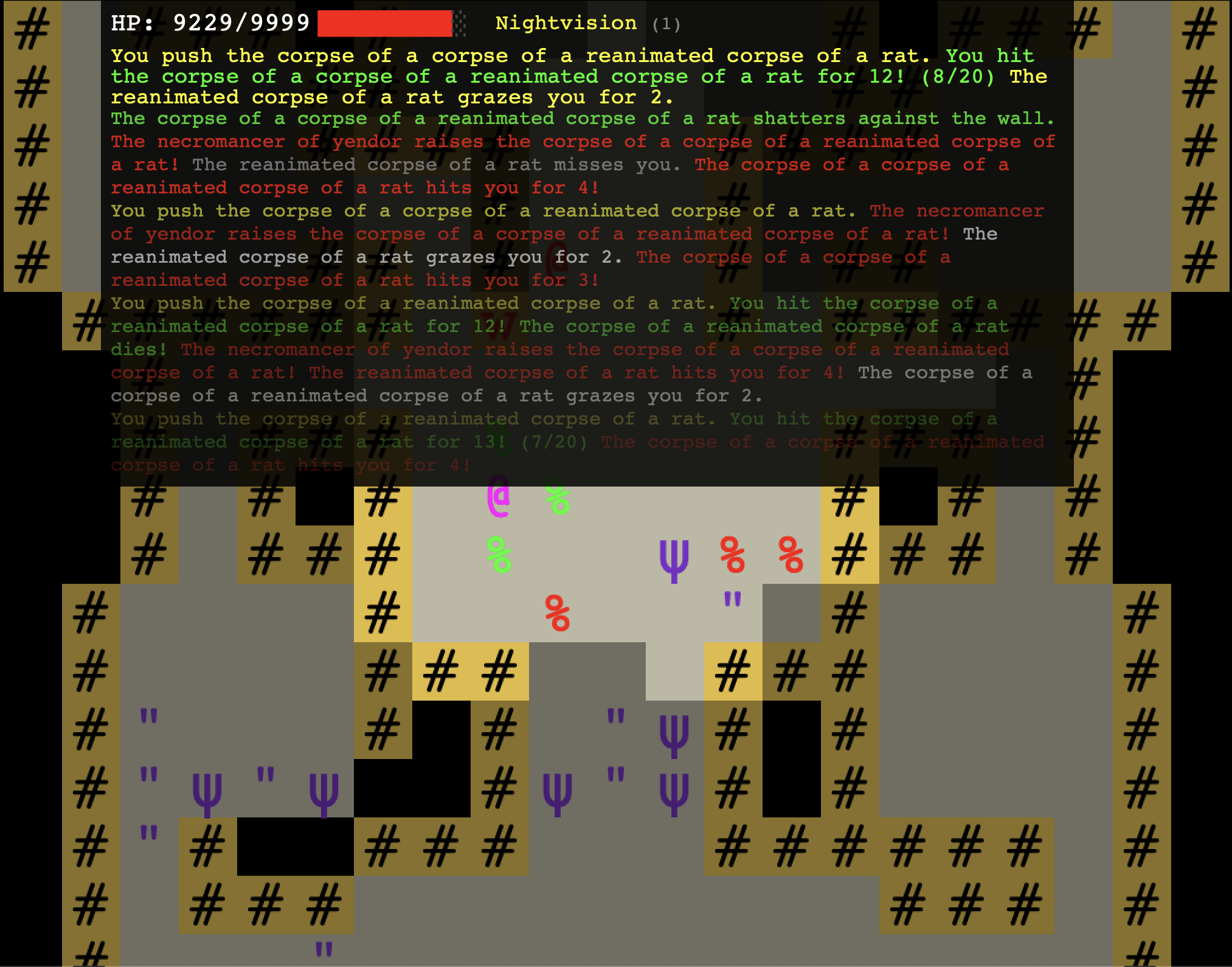
Objects which can be pushed and shattered against walls on the map.
...and more!
Summary of Findings:
Digital fieldwork over AY25/26 Sem 1 informs these findings:
1. TRDCs perform boundary work.
2. TRDCs blur lines between play and labour.
3. TRDCs are a recursive public.
4. Code itself is infrastructure that can be looked at ethnographically.
Technical Details:
It is coded using the web development programming languages JavaScript, HTML and CSS.
It uses the ROT.js library by Ondřej Žára with tools for roguelike game development, and highlight.js, which highlights code blocks in color.
It started with following Ananas aus Caracas, a ROT.js tutorial by Abdul-Kadir Coskun.
It can be hosted online on a server as a standalone website that is also a playable game.
It includes 6 instrumentals and 8 sound effects recorded by the author in the .ogg format supported by most modern web browsers.
It does not use any images or videos.
Excluding the included library file rot.js.min, it consists of approximately 6000 lines of code.
Leave a comment
Log in with itch.io to leave a comment.